The New Seven Wonders of the World: A Look at All Seven
The New Seven Wonders of the World

The word “wonder” carries the meaning of “something beyond what human thought can fathom.” In the end, the Seven Wonders of the World refers to seven structures around the world that are simply unbelievable as something built by human hands. The term was first born around the 2nd century BC, coined by a Greek poet. Back then, transportation and architectural theory weren’t as developed as today, so most of the wonders were said to be clustered around the Mediterranean.
So, in the year 2000, a Swiss foundation launched a campaign to decide the new Seven Wonders of the World — because of the wonders listed in the 2nd century BC, only the Pyramids of Giza now remain. The modern wonders were finalized into the current list by reflecting the opinions of more than 100 million people via the internet and text messaging. Experts’ views are included too, but since ordinary people’s personal opinions are also factored in, there may be some you can accept and some you can’t.
Even so, the fact that these wonders are mysterious and awe-inspiring structures probably won’t change. Which structures made the New Seven Wonders of the World, announced in 2007 by the New7Wonders Foundation? And how many of them will you accept as wonders? Let’s find out.
Table of Contents
The Seven Wonders of the World, Modern Edition
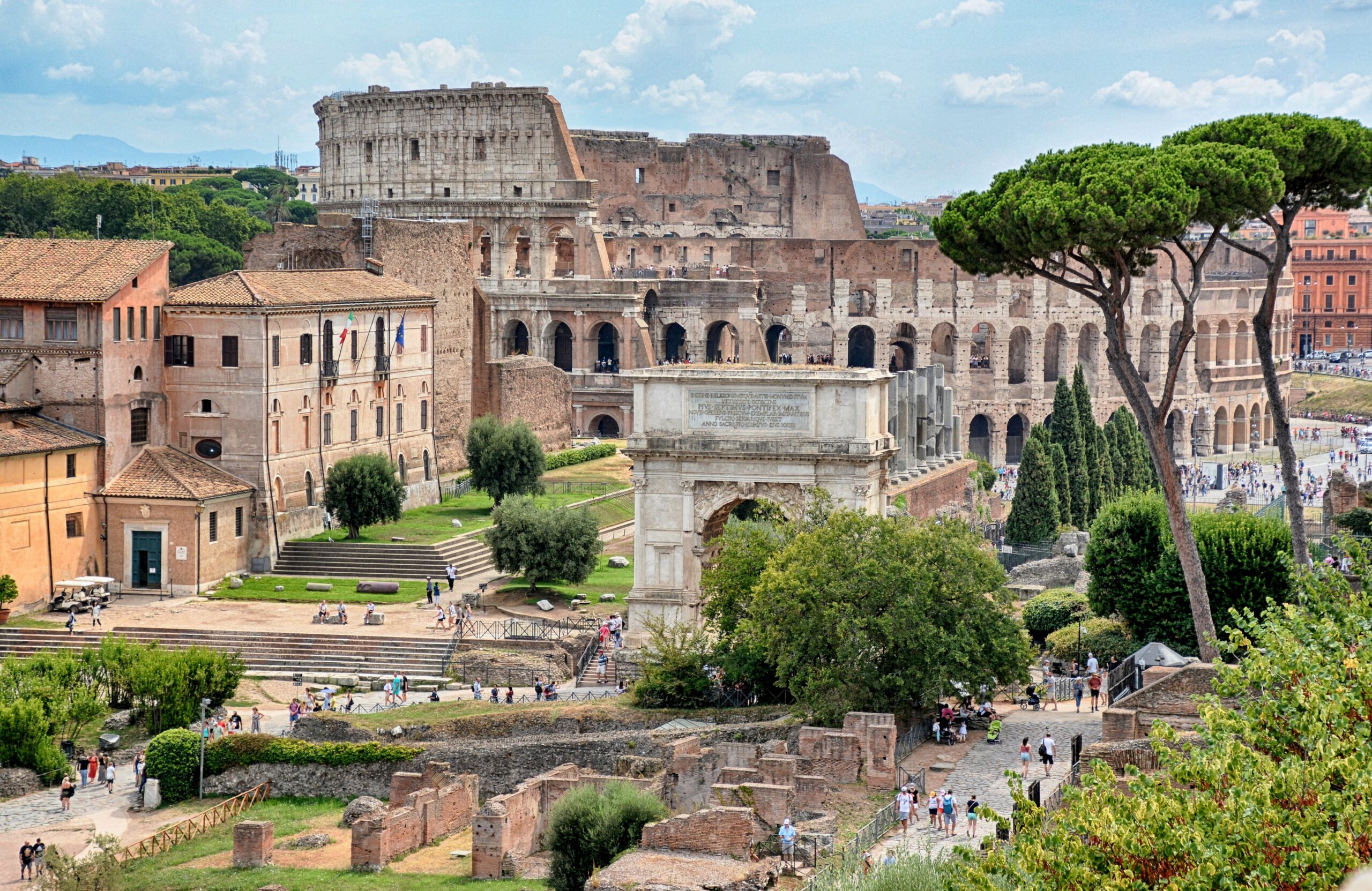
1. Italy — Colosseum
Colosseum in Italy
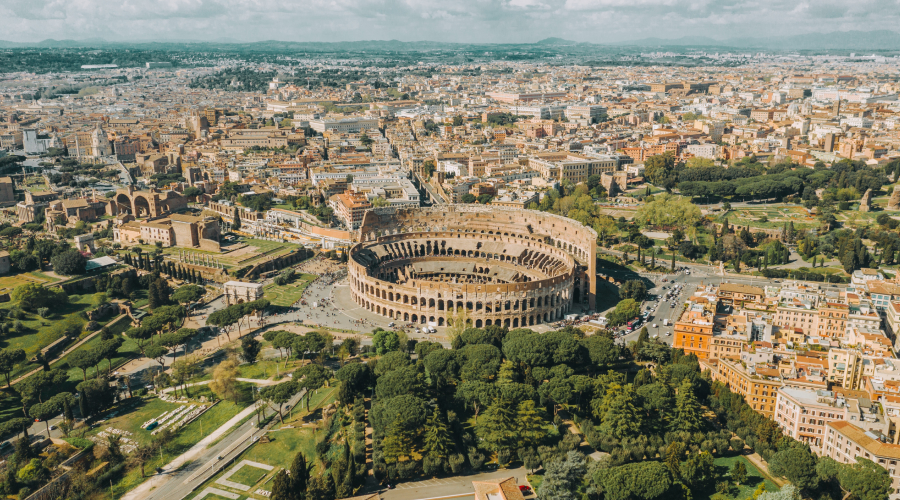
Italy’s Colosseum is one of the New Seven Wonders of the World, newly listed in 2007. This famous attraction, a must-see at least once when you visit Italy, is said to leave you overwhelmed by its architectural style and detail.
The reason Italy’s Colosseum is a wonder is that it was built in the Roman era, with the architectural style of the time fully woven into it. The Colosseum is also the largest amphitheater Rome ever built. Before it was damaged, the Colosseum’s scale was such that its outer wall stood 171 feet (52 m) tall, and it could hold up to 80,000 spectators including standing room.
Being an “amphitheater,” the structure was used for spectacles like fights and performances. Battles between condemned prisoners and wild beasts, and duels that didn’t end until one side died, made up the bulk of it — and occasionally the arena was filled with water to stage naval battles. Honestly, “holds 80,000 spectators” didn’t really convey the size to me, but hearing they staged naval battles, it suddenly hits me just how enormous it is.
2. Mexico — Chichén Itzá
Chichen-Itza in Mexico
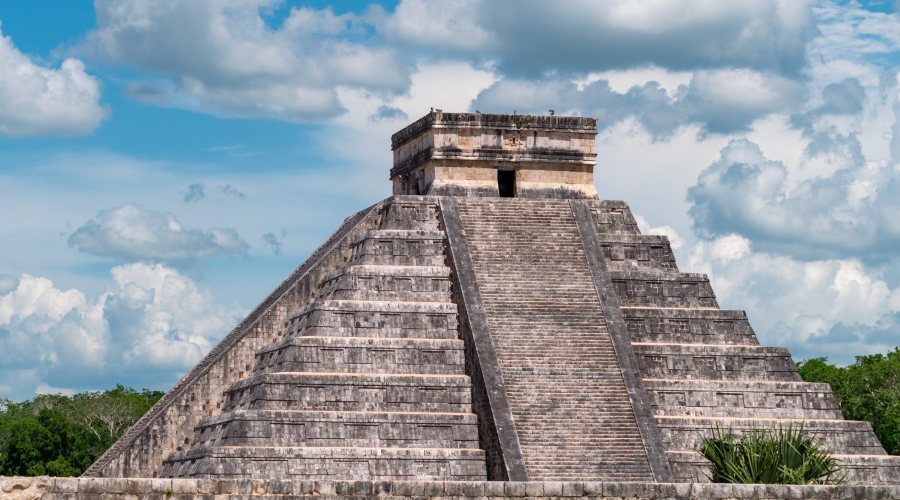
Mexico’s Chichén Itzá is a Maya city on Mexico’s “Yucatán Peninsula” that flourished in the 9th and 10th centuries. The “Itzá,” a Maya people influenced by the “Toltecs” who ruled the Mexican highlands, left behind numerous major monuments and temples in this era. One of them is “El Castillo,” a stepped pyramid soaring 79 feet (24 m) high. Showing just how interested Maya civilization was in astronomy, this structure has 365 steps to match the number of days in a solar year. Also, at the base of the stairs on the pyramid’s north face, a serpent’s head is carved — and each year at the spring equinox sunrise, a shadow falls in the shape of it slithering down, while at the autumn equinox, conversely, the shadow appears to slither up.
To witness this mysterious sight, one of the New Seven Wonders of the World, it’s important to plan your travel dates well.
3. Brazil — Christ the Redeemer
Christ the Redeemer in Brazil
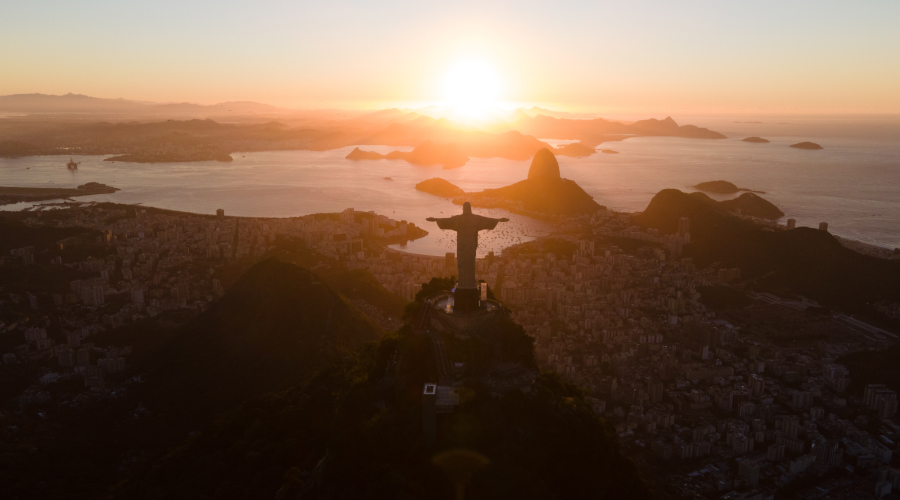
Brazil’s Christ the Redeemer, which newly appeared in 2007, is one of the wonders that never stops stirring controversy. Even though it sits atop the 2,300-foot (700 m) “Corcovado” mountain, it’s neither the largest statue of Jesus in the world, and its history is excessively short compared to the other structures. Even so, this structure has stubbornly held onto its title as one of the New Seven Wonders of the World — and it’s hard to agree that it isn’t enormous.
This statue stands 98 feet (30 m) tall, with an arm span of 92 feet (28 m), and weighs 635 tons. Towering high enough to be seen from anywhere in Rio de Janeiro, and enormous on top of that, it has become a landmark of Brazil like the Statue of Liberty in New York or the Eiffel Tower in Paris. An interesting fact: built around 1930, it has been struck by lightning from time to time ever since, and in 2014 part of its right thumb was damaged by a storm.
4. Peru — Machu Picchu
Machu Picchu in Peru
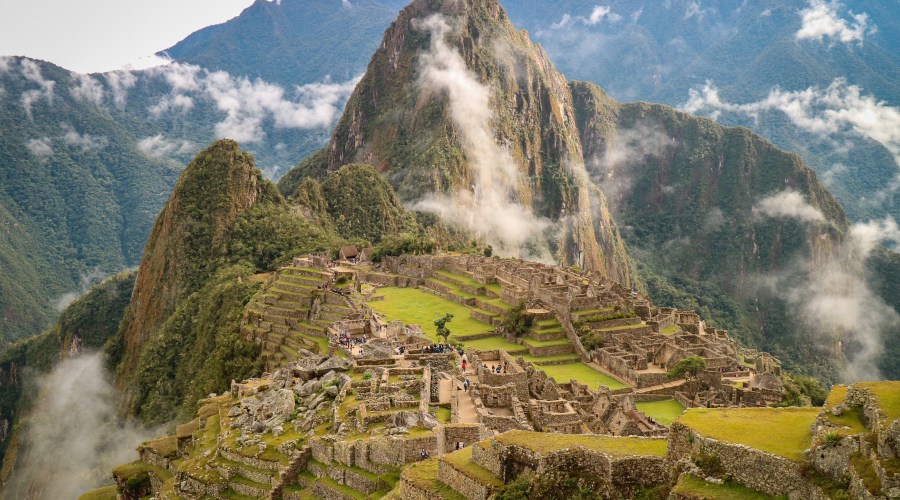
Peru’s Machu Picchu is one of the important sites that can’t be left out of the New Seven Wonders of the World. When it was first discovered in 1911 by “Hiram Bingham,” it was thought to be “Vilcabamba,” the secret fortress of the Incas. That claim was later disproven, and it was revealed to be the home of the “Virgins of the Sun,” who had sworn chastity. But that claim too was nothing more than conjecture; some argue it was a place of pilgrimage, and others argue it was a royal retreat.
Still unexplained and remaining a vast ruin, Machu Picchu is known to be a city that arose at least before the 16th century, yet its state of preservation is remarkable. Its near-perfect engineering produced waterways where water never pools, a Temple of the Sun built without touching the natural stone, and elaborate stonework and carvings. I don’t know how such a near-perfect civilization was built at a rugged alpine altitude of 7,995 feet (2,437 m), but this, surely, is what a wonder is — that’s the thought that comes to mind.
5. Jordan — Petra
Jordan in Petra
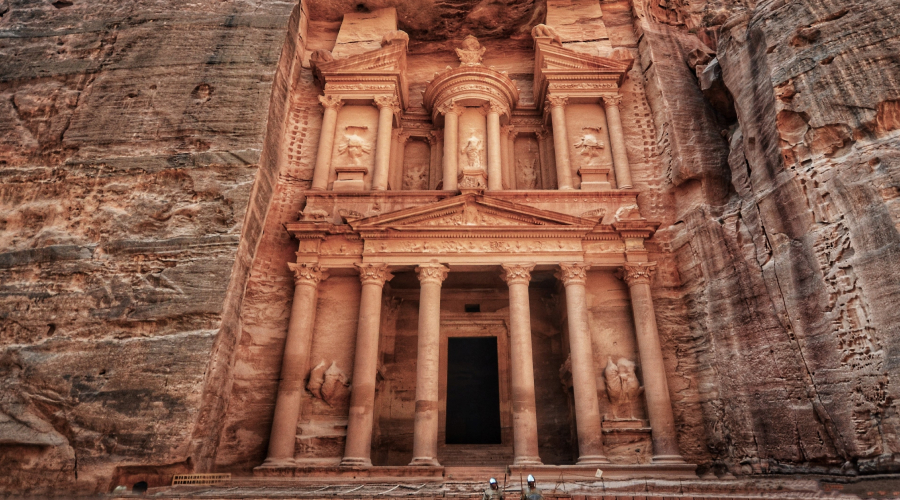
Petra, one of the New Seven Wonders of the World, is an ancient city in Jordan. A distinctive feature is that it sits in a remote valley between sandstone and cliffs. It’s known as one of the places where Moses struck a rock and water gushed forth, and over time an Arab people settled here and made it their capital. They were the “Nabataeans.”
While they lived in Petra, the city became a major trading hub for spices and prospered greatly. They are also called master sculptors, since they carved temples, tombs, and dwellings directly into the sandstone, rock, and cliffs. It looks small from the outside, but inside the cliffs lies a vast city like an ant colony, and its residents are said to have numbered more than 30,000.
However, as time passed, the spice trade routes shifted, and two great earthquakes struck in 363 and 551 AD, so Petra was gradually abandoned. Although it was rediscovered relatively recently, in 1812, it didn’t draw much interest from archaeologists until the late 20th century, so the city still holds many mysteries.
6. India — Taj Mahal
Taj Mahal in India
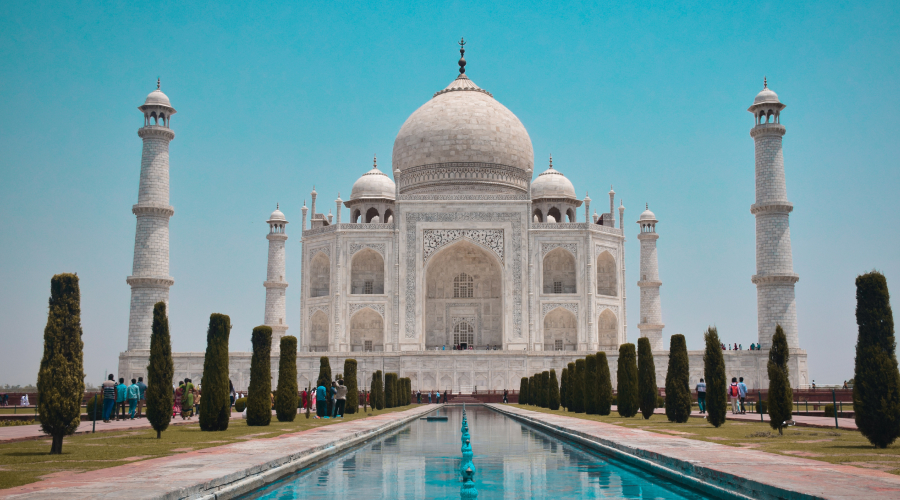
This enormous “mausoleum” located in Agra, India, is not only one of the world’s most iconic monuments but is also recorded as one of the New Seven Wonders of the World. The reason the Taj Mahal — which is, after all, just one person’s tomb — can draw this much attention is that it’s hard to believe it was completed in just 22 years with 17th-century technology.
Emperor “Shah Jahan,” who began construction to honor his wife who died giving birth to their 14th child, spent about $700 million on construction costs solely for the Taj Mahal, and brought in all sorts of engineers and artisans from Persia, Italy, France, and elsewhere. The building materials, too, were said to be hand-picked from the finest available at the time.
Completed by about 20,000 people over 22 years, the Taj Mahal is also fascinating in that the building itself forms perfect proportions and left-right symmetry. The sight of the Taj Mahal reflected in the still water in front of the garden seems to convey just how majestic it is, even without seeing it in person. That said, compared to the splendid exterior, the interior is reportedly not as ornate.
7. China — Great Wall
Great Wall in China
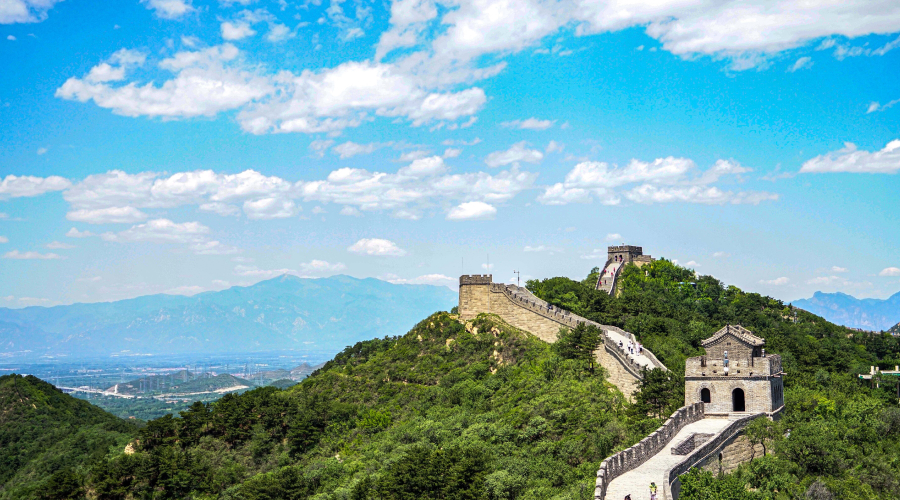
The last of the New Seven Wonders I’ll introduce is China’s Great Wall. Along with Brazil’s Christ statue, the Great Wall is controversial as to whether it qualifies as a wonder — its scale is certainly tremendous, but its state of preservation is said to be very poor. In fact, looking through reviews of the Great Wall on overseas travel sites, there were many comments like “it wasn’t as impressive as the photos” and “the uneven path was intimidating.”
Even so, this structure, still praised as a wonder, began construction in the 7th century BC and took its current form as it was rebuilt and extended over 2,000 years. It got its name (in Korean, “Man리,” meaning 10,000 li, about 3,927 km / 2,440 mi), but no one seems to know its exact length. Some sources say 6,000 km (about 3,700 mi), while others say 8,850 km (about 5,500 mi). China even claims a length of 21,200 km (about 13,200 mi), not even comparable to the figures above. Before being stubborn about the length, it seems more important to put effort into preserving the cultural heritage!
Since I’d already covered some of the Seven Wonders of the World while writing about world landmarks before, I thought I’d be able to wrap up this content quickly. But the more I looked into the material, the more fascinating points there were, so summarizing them inevitably ate up a lot of time. Thanks to that, it was fun to build up new knowledge about these structures. If I happen to travel nearby later, I think I’ll be able to confidently tell the people around me about them.
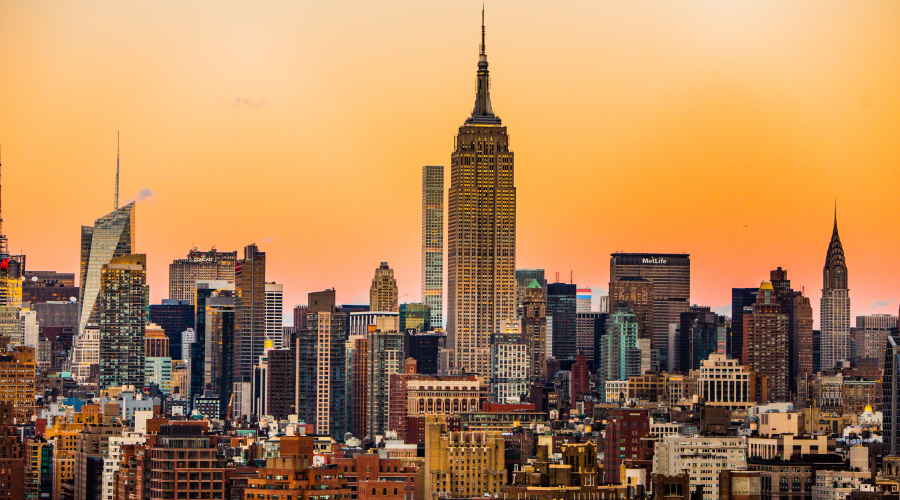
There were also many less-prominent wonder structures selected by the American Society of Civil Engineers. These include the Channel Tunnel under the Strait of Dover, the CN Tower in Toronto, the Empire State Building, the Golden Gate Bridge, the Itaipu Dam, the Delta Works / Zuiderzee reclamation project, and the Panama Canal.