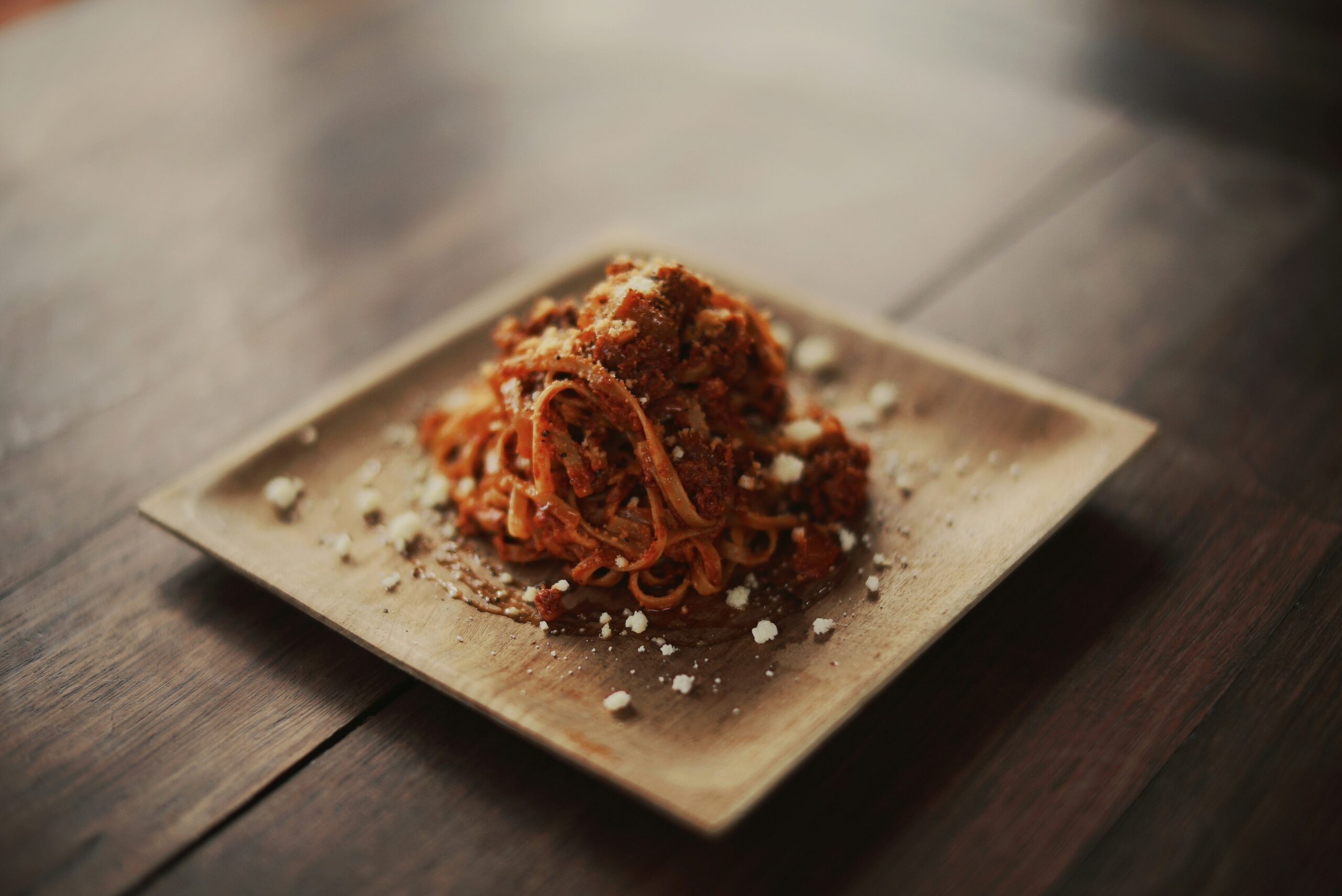
26 Types of Pasta Sorted by Sauce, with Names and Origins
26 pasta types and names, sorted by sauce
Italy, the home of pasta, is — as you well know — a nation of fine food. True to that reputation, it’s known for making even a single plate of pasta properly and with great care. As a result, most Italian restaurants tend to cook with seasonal ingredients only, rather than relying on what’s been stored away. Popular, everyday pastas in particular have been tweaked little by little to suit individual tastes, so it’s estimated there are over 600 varieties alone. But since the basic base doesn’t stray far, they’re not all that different from the pasta we already know. So what kinds of base sauces are there for pasta? Here we go — 26 pasta types and names, sorted by sauce!
Table of Contents
Pasta Types and Names, the Sauce Edition
1. Tomato-Based Pasta, 10 Kinds
Amatriciana
Amatriciana is named after Amatrice, a town northeast of Rome. It’s made with guanciale (cured pork jowl), diced tomatoes, and pecorino cheese. Pasta shapes that pair well with amatriciana include spaghetti and bucatini.
Arrabbiata
Arrabbiata is a spicy sauce made from tomatoes, olive oil, garlic, and red chili peppers. Translated literally from Italian, the word carries the meaning of “anger,” so it’s also called “angry pasta.” The most common pasta shape for arrabbiata sauce is penne, but rigatini or rigatoni are sometimes used when penne isn’t on hand.
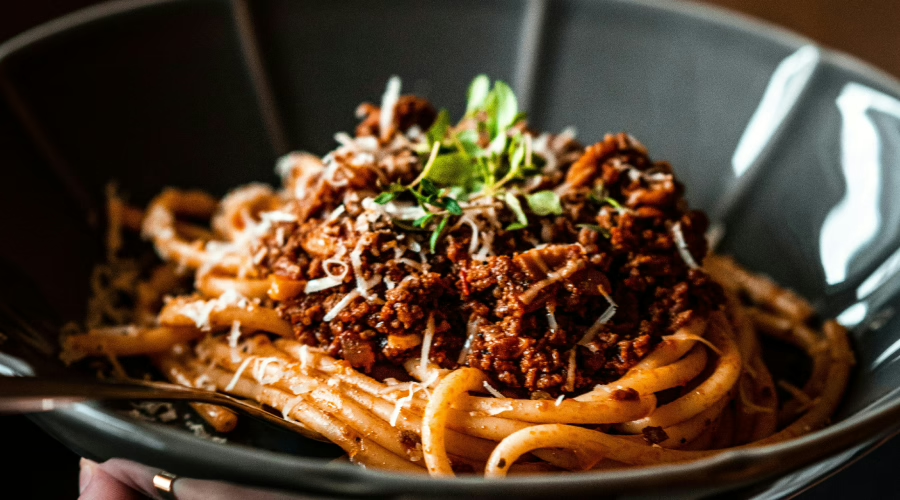
Bolognese
Bolognese is said to have first been introduced to the world in the late 18th century by Alberto Alvisi, the cook for Pope Pius VII. Based on tomatoes or tomato purée, it’s finished with beef or pork, wine, nutmeg, salt, and pepper. Lasagna is a fitting pasta for it, but it’s also said to go well with pappardelle, fettuccine, and farfalle.
Fra Diavolo
Fra Diavolo is a pasta whose name means “brother devil.” Based on tomatoes, it’s made with crushed chili, garlic, parsley, basil, and similar ingredients. Italy claims fra diavolo as a traditional Italian sauce, while the U.S. claims it was invented by an Italian American in the 1930s. Unlike Bolognese, its flavor is said to peak especially when paired with seafood.
Frutti di Mare
While other tomato-based pasta sauces come out tangy or sweet, frutti di mare sauce is said to have a strong savory-salty flavor. The phrase means “fruit of the sea” in Italian. As the name suggests, it’s a pasta that pairs better with clams, mussels, shrimp, and scallops than with meat.
Marinara
Marinara, a pasta commonly seen in the U.S. too, is a simple sauce made of tomatoes, olive oil, garlic, and herbs. Onion, cheese, or peperoncino are sometimes added as well. As well known as it is, you could call it the ancestor of the tomato-sauce family, and depending on what you add, it can become arrabbiata or puttanesca.
Puttanesca
Born from a variation on marinara, puttanesca is known as a humble sauce — likely because it’s quick and easy to make. Invented at a famous restaurant in Ischia in the 1950s, it’s finished with tomatoes, olive oil, Gaeta olives, capers, garlic, oregano, and the like. Depending on taste, salt-cured anchovies or chili peppers are used too!
Tomato Tonno
Tonno means tuna in Italian. In other words, tomato tonno is a sauce you can make with just tomatoes and tuna. It’s easy to make but not entirely mainstream, so it’s often adapted to taste. Some chefs add parsley or basil, while others add capers or olives for a sharper kick.
Scarpariello
The pasta known as scarpariello is said to derive from “scarparo,” the Italian word for shoemaker. Built on a tomato sauce, it’s finished with leftover cheese and a handful of basil. You choose the amount and type of cheese to taste, and meat is sometimes added as well.
Sunday
The last of the tomato-based pastas is Sunday, which means exactly that — Sunday. This sauce is believed to have been invented by Italian Americans who emigrated to the U.S. between 1870 and 1920. Much like the Italian-American tradition of “Sunday gravy,” it’s often made on Sundays, and it’s characterized by meat simmered long and slow in tomato sauce until thick and rich. The meat varies too — beef, pork, veal — and sometimes all of them are used at once. Of the 10 tomato sauces, Sunday is hands down likely to have the deepest flavor!
2. Dairy-Based Pasta (Cheese, Butter, Milk, etc.), 7 Kinds
Alfredo
Alfredo is a dairy-based pasta. Made with nothing but Parmigiano-Reggiano cheese, butter, and salt, it first came about in 1908. It was invented by chef Alfredo di Lelio, who set out to make a simple yet nourishing dish. The pasta that suits it well is fettuccine — and it pairs so beautifully that the dish “fettuccine Alfredo” is even more famous than the sauce called Alfredo itself!
Béchamel
At last, a pasta with no connection to Italy! It’s béchamel. The béchamel sauce is one of the five mother sauces of France and is used in countless dishes. It’s typically thickened with butter, flour, nutmeg, milk, pepper, and salt.
Brown Butter and Sage
Unfamiliar and a little unusual in name, brown butter and sage is exactly that — a pasta made on a base of brown butter. Sage is an herb in the mint family, commonly found around the Mediterranean. Because it pairs so well with butter, this sauce was born. With ingredients this simple, the ratios and freshness are what matter most.
Cacio e Pepe
Originating in Rome, cacio e pepe is a simple yet traditional Italian pasta. Nothing goes into it but aged Pecorino Romano cheese, salt, and pepper — but precisely because the ingredients are so few, the ratios and freshness are crucial to maximizing the flavor. Thanks to its rich carbs and fat, it’s said to have been popular among shepherds in cold regions.
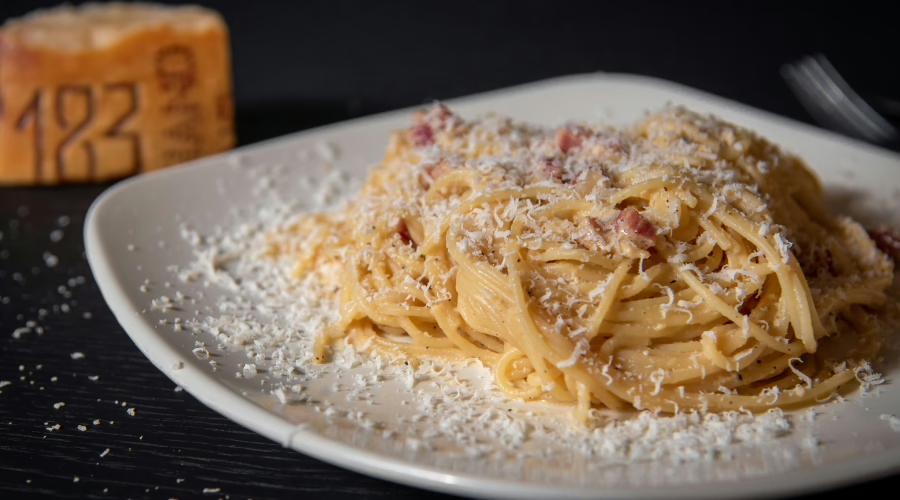
Carbonara
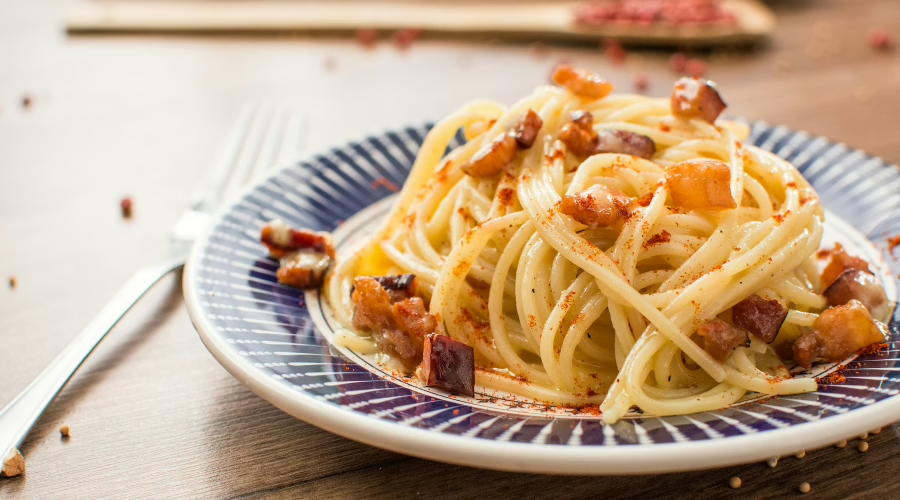
Carbonara, which you’ll commonly see in the U.S. too, is a pasta made with egg yolks, Pecorino Romano cheese, and guanciale (cured pork jowl). That’s quite different from the cream-based carbonara so common outside Italy. Despite its simplicity, it’s hugely popular for its great taste and aroma, and as a result it has spawned countless variations all over the world.
Gricia
Like carbonara, gricia is a pasta made by combining Pecorino Romano cheese and guanciale. The only difference is that it doesn’t use egg yolks. Simple yet delicious, it’s a sauce used in plenty of dishes beyond pasta.
Quattro Formaggi
Quattro formaggi is famous in the U.S. as a cheese pizza, but in Italy it’s known as a popular pasta sauce. As the name tells you, it’s made with four cheeses, and which ones you use comes down to personal taste. Popular cheeses for quattro formaggi include mozzarella, provolone, fontina, ricotta, gorgonzola, and Parmigiano-Reggiano. Because you can use all kinds of cheese to taste, quattro formaggi is a pasta whose flavor and texture vary with whoever makes it.
3. Oil-Based Pasta, 3 Kinds
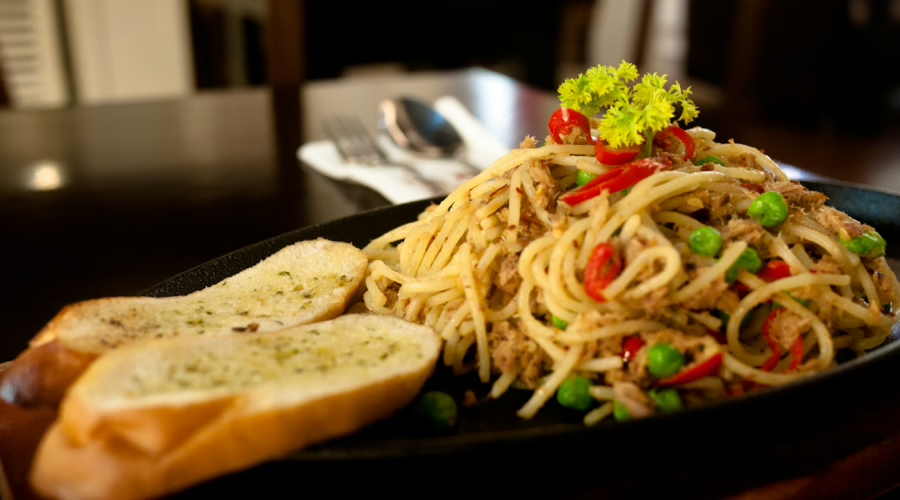
Aglio e Olio
One of my favorite pastas, aglio e olio is — just as the name implies — a sauce built on a base of olive oil. It’s made with nothing but olive oil and garlic, with peperoncino, cheese, or parsley added to taste. Personally, I like aglio e olio with clam meat in it! Hehe
Sicilian Sardine
A common ingredient in traditional Sicilian cooking is, as it turns out, the sardine. That’s why the pasta known as Sicilian sardine is famous too. Relatively common across Europe, this fish, when it meets pasta, is said to lend a slightly salty, oily flavor. For something you may never have heard of, it’s a sauce with surprisingly deep history, and a pasta shape that pairs well with it is bucatini.
White Clam
I suspect the vongole we’re all familiar with derives from this pasta. It’s a sauce finished by tossing white clams in extra-virgin olive oil. Linguine and spaghetti pair well with it, and tomato sauce is sometimes used to taste. So I agonized over whether to file the base under oil or other. Since white clams are almost never paired with tomato sauce in Italy, I went with oil!
4. Other-Based Pasta, 6 Kinds
Colatura di Alici
Colatura di alici is an anchovy sauce made in Italy. Anchovies caught off the Amalfi Coast are salt-cured and stored, and the resulting liquid is used to make the sauce. Pair olive oil, colatura di alici, and roasted vegetables and you can enjoy a pasta rich in umami. I genuinely can’t imagine what it tastes like…
Lemon
You might wonder whether lemon really goes with pasta, but it does exist…… Unlike the usual thick, dense pasta sauces, lemon sauce is said to be fresh and light. You just mix lemon juice, zest, garlic, salt, and pepper, then spoon it over the pasta — done. To taste, you generously shower it with Parmigiano-Reggiano, and again, I can’t quite picture how it tastes!
Nero di Seppia
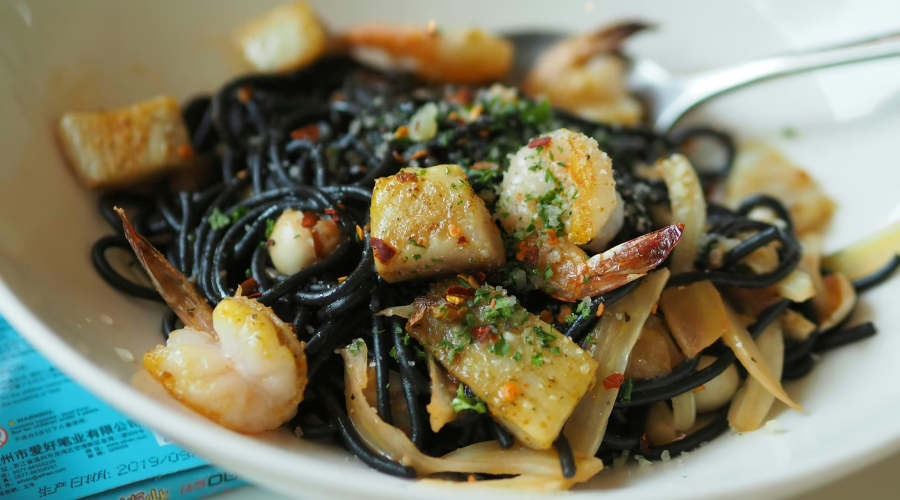
As some of you may have guessed, nero di seppia is a pasta made on a base of squid ink. In the past, squid ink was used to strengthen the immune system and as an antibacterial agent. Despite these health benefits, the look of it (…) isn’t exactly appetizing, so it’s not an ingredient used very often. Squid-ink pasta is well known from Sicily all the way to Venice.
Pesto
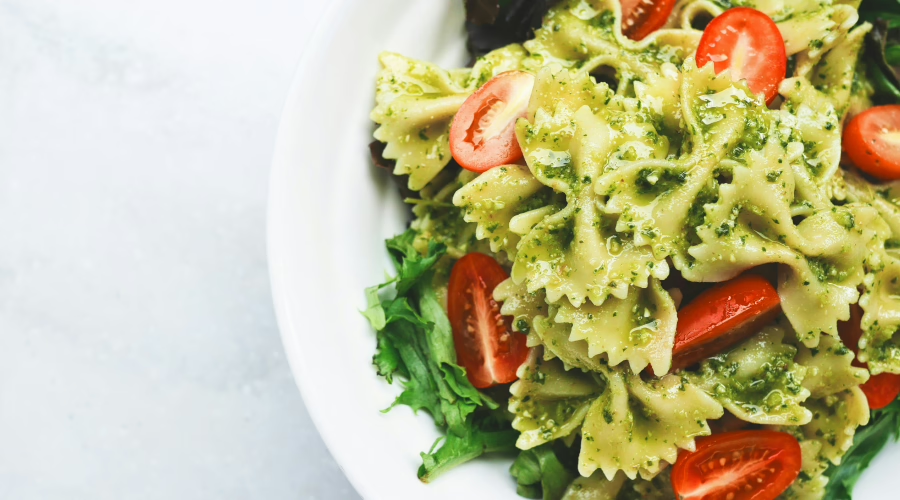
Pesto is a sauce made by blending pine nuts, basil, a hard Italian cheese, garlic, and extra-virgin olive oil. A pesto-based pasta has the advantage of being very convenient, since you only need to use sauce you’ve already made. Pasta shapes that pair well with it include fusilli, rotini, and farfalle.
Salsa di Noci
“This goes with pasta?” — there’s a dubious sauce like that too. It’s a sauce made from walnuts. Salsa di noci originated in the Liguria region of northwestern Italy, and it even has deep history. It’s made by blending walnuts, Parmesan cheese, garlic, olive oil, milk, and white bread; a smooth salsa di noci uses lots of milk and olive oil, while a thick one uses lots of bread.
Vodka
There’s also vodka sauce, whose exact time and place of origin have never been pinned down. Vodka isn’t the main ingredient, though — it’s a sauce made by adding vodka to certain sauces. The story goes that it started when someone added vodka to thin out a tomato sauce they wanted lighter, and it stuck around to this day. Italy and the U.S. each claim to have invented it, but the sauce has nearly vanished in Italy, while Americans still enjoy it just fine.
Before reading this, did you know there were this many pasta sauces? I’d heard that lots have spawned this way and that, but I had no idea there were this many basic — that is, base — sauces. It was also a bit of a shock to learn that vongole, one of my very favorite pastas, is a derivative. As much as I love pasta, I’d love to cook all kinds of pasta dishes, but I have absolutely no talent for Western cuisine, so I always just pay good money to eat out. Someday, when my kitchen gets bigger, I’d love to stock up on ingredients, learn in earnest, and take on the pasta types I’ve introduced here.