The World’s Top 10 Cakes, Ranked for the Christmas Season
For the Christmas season, the world’s top 10 cakes

Soon the end of the year — and Christmas — will be upon us. One of the world’s biggest occasions, Christmas isn’t, sadly, treated as much of an event back in my country. Plenty of individuals look forward to it, but it doesn’t seem like festivals or events are held at the national or regional level. That’s clearly different from the U.S., where the mood flips entirely to Christmas the moment Thanksgiving passes. And most European countries start preparing for Christmas from early to mid-November, stretching it out as long as February. As a result, there are commemorations, events, and foods you can’t do without at Christmas — cookies, breads, cakes, and the like.
That said, not every cookie and cake sells well; some sell especially better than others. Since we don’t really have those back home, I thought it might be fun to enjoy cakes that are popular worldwide. So today’s piece is the world’s Top 10 cakes.
Table of Contents
Christmas Prep — The World’s Top 10 Cakes
No. 10 Italy — Cassata
Top10 Italy, Cassata
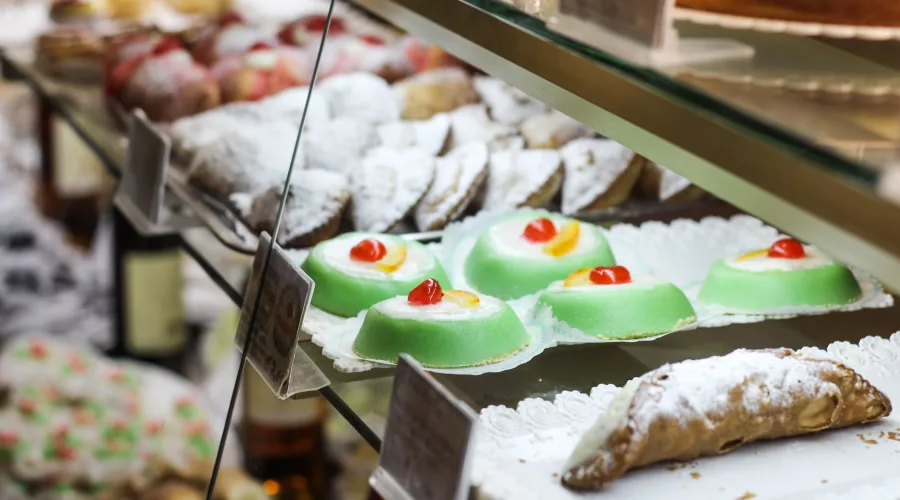
Cassata, born in Sicily, Italy, ranks No. 10 among the world’s best cakes. The cake is made with a génoise sponge soaked thoroughly in liqueur, topped with ricotta cheese and candied fruit. A génoise sponge here is a sponge cake made by blending Italian and French recipes. Instead of using a chemical leavener, it’s made using trapped air — though without any baking know-how, I can’t quite grasp exactly what that means. 😢
In any case, the cassata cake — pretty in both taste and appearance — is eaten all year round, but is said to be especially popular at Easter. If it’s a cake you’ve never had, I recommend taking this chance to make one yourself or buy one to enjoy.
No. 9 Russia — Medovik
Top9 Russia, Medovik
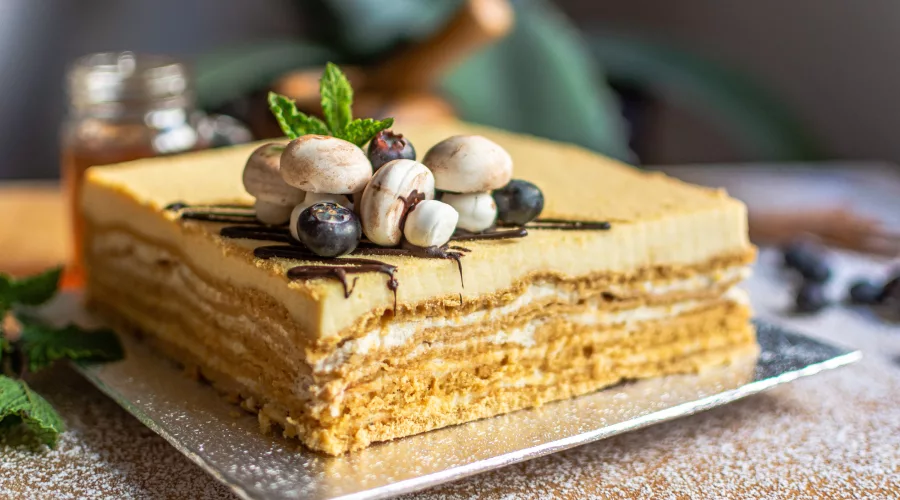
First appearing in the 1820s, Medovik is a cake made for the wife of Alexander I. Because layer upon layer of honey is spread over a biscuit-like sponge, it’s also called honey cake. The recipes vary widely, though. Sometimes custard is used instead of honey, in which case the custard is made by blending whipped cream, condensed milk, and butter. Some people add berry fruit jam, and some even add chocolate — at which point, I can’t help thinking it strays a bit far from the traditional Medovik. Haha.
No. 8 Poland — Sernik
Top8 Poland, Sernik
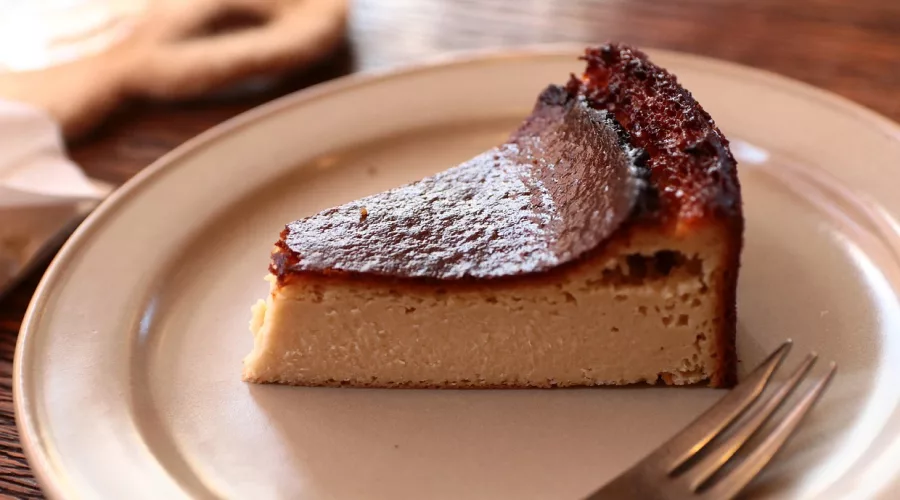
Coming in at No. 8 among the world’s best cakes, Sernik is a cheesecake born in 17th-century Poland. Originating from Christian and Jewish traditions, this cake is made on a base of eggs, sugar, and quark. Quark here refers to a crumbly type of cheese commonly used in desserts. Depending on taste, the cake is either baked or served unbaked. Some enjoy it with raisins, chocolate sauce, or fruit, but the most popular version is still the one finished with snow-white powdered sugar on top.
No. 7 USA — New York-Style Cheesecake
Top7 USA, New York-Style Cheesecake
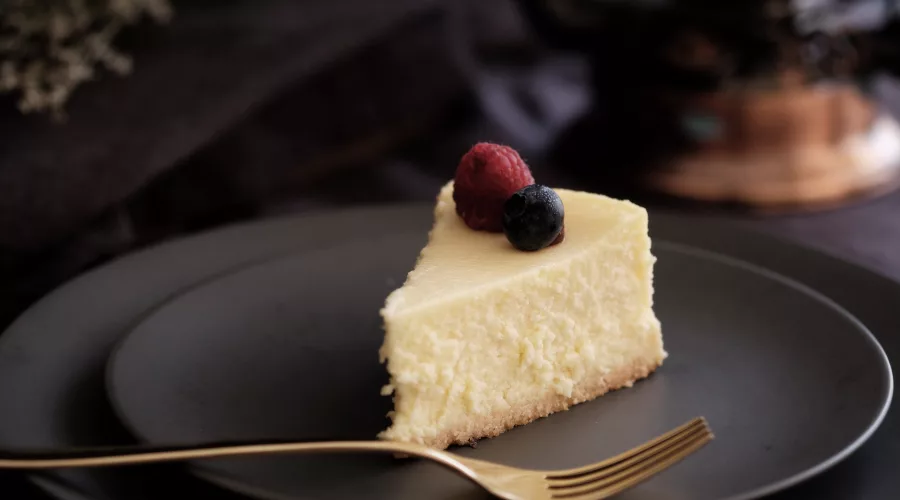
Created relatively recently and beloved ever since, New York-style cheesecake takes No. 7 among the world’s best cakes. Originating at Junior’s in the 1950s, this cake is denser and heavier than other cheesecakes and, unlike them, has no citrus aroma. You can think of the cheesecake commonly enjoyed back home as this New York style. Recipe ingredients include heavy cream, eggs, vanilla, and cream cheese or sour cream, and like other cheesecakes of European origin, the base is a finely crushed crust. It plays an important role in the varied texture.
No. 6 UK — Pound Cake
Top6 UK, Pound Cake
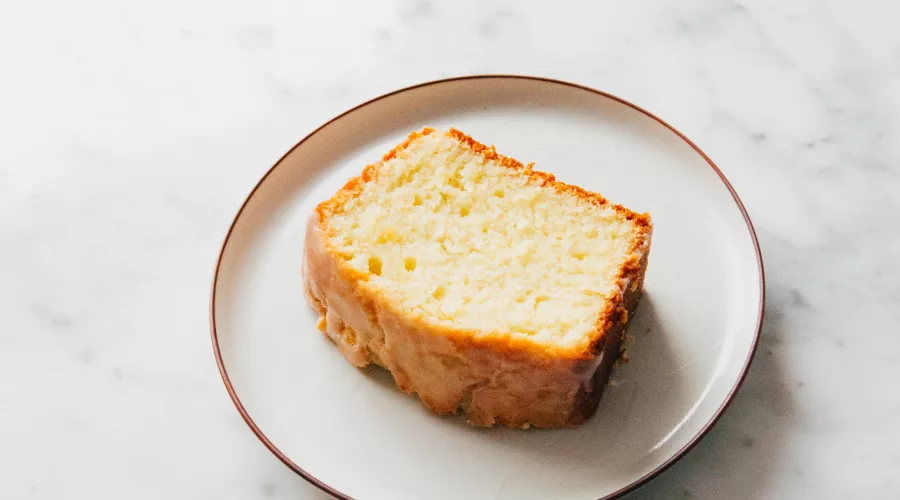
No. 6 among the world’s best cakes is the UK’s pound cake. The pound cake gets its name from using one pound each of flour, butter, sugar, and eggs. It uses no leavening agent at all, yet it’s large in volume with a soft texture and low density. Back in the 1800s, lighter, larger pound cakes were made with smaller amounts of ingredients; today, yeast is used to lower the density relatively easily, while ingredients like chocolate and orange peel are added to boost the flavor.
No. 5 Germany — Black Forest Cake
Top5 Germany, Schwarzwälder Kirschtorte
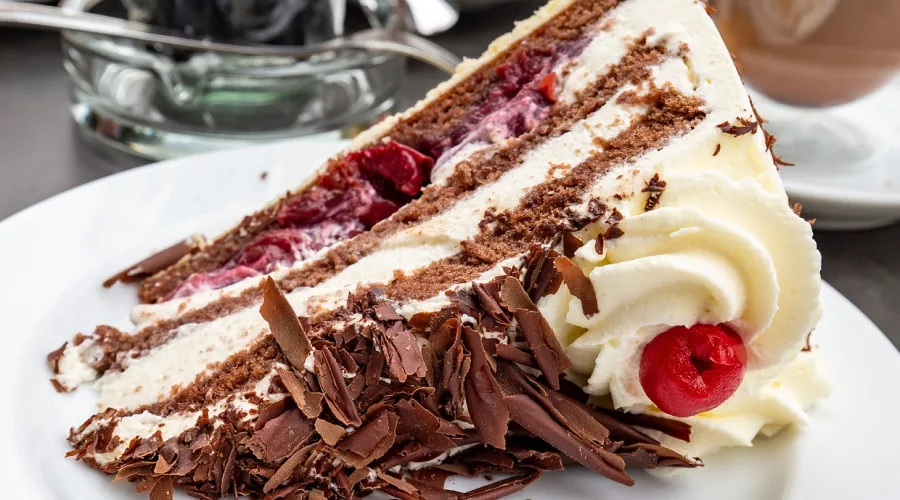
Schwarzwälder Kirschtorte translates literally to Black Forest cake. As the name suggests, it’s a cake made of chocolate sponge and chocolate shavings. The signature touch is layering whipped cream between the sponge to lighten the density, then lavishly decorating the finished cake with chocolate shavings and cherries. The exact story of how this cake first came about isn’t clear, but it began to become known to the public around 1934, and today it ranks No. 5 among the world’s best cakes.
No. 4 Austria — Sachertorte
Top4 Austria, Sachertorte
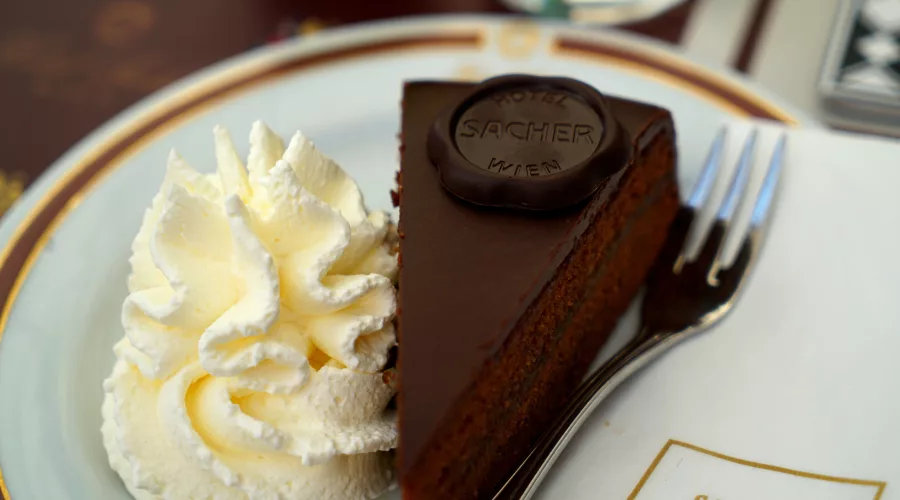
Austria’s most famous cake — and No. 4 among the world’s best — is the Sachertorte. Invented in 1832 by Franz Sacher, a cook for Austria’s chancellor-prince, it has been beloved ever since. It’s called a classic cake in that it’s made with ingredients easily found in any kitchen. It’s finished with a thin coat of fine apricot jam topped with chocolate icing, and interestingly, there’s also a version without the apricot jam that you’d think would be its signature. Its popularity is about the same with or without the jam, but apparently only a cake bearing a chocolate seal engraved with the word “SACHER” counts as a true Sachertorte.
No. 3 Austria — Cremeschnitte
Top3 Austria, Cremeschnitte
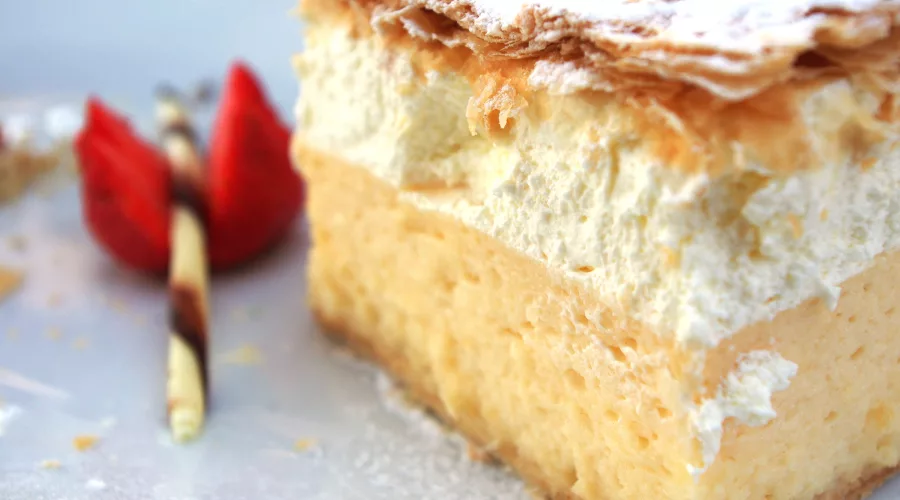
No. 3 among the world’s best cakes is also a cake of Austrian origin. The Cremeschnitte — whose very name evokes a soft texture and sweetness — is quite popular even among Central and Eastern European desserts. Made by blending Hungarian and Austrian cuisines, it has a look and taste similar to the French mille-feuille.
The Cremeschnitte is made by placing an overwhelming amount of vanilla cream between two layers of pastry. A thin layer of whipped cream is then added on top of the finished cake to bring extra sweetness. Today the Cremeschnitte is served in all sorts of recipes and variations, and the version said to have been loved by Napoleon reportedly had three layers of pastry rather than two.
No. 2 Japan — Castella
Top2 Japan, Kasutera
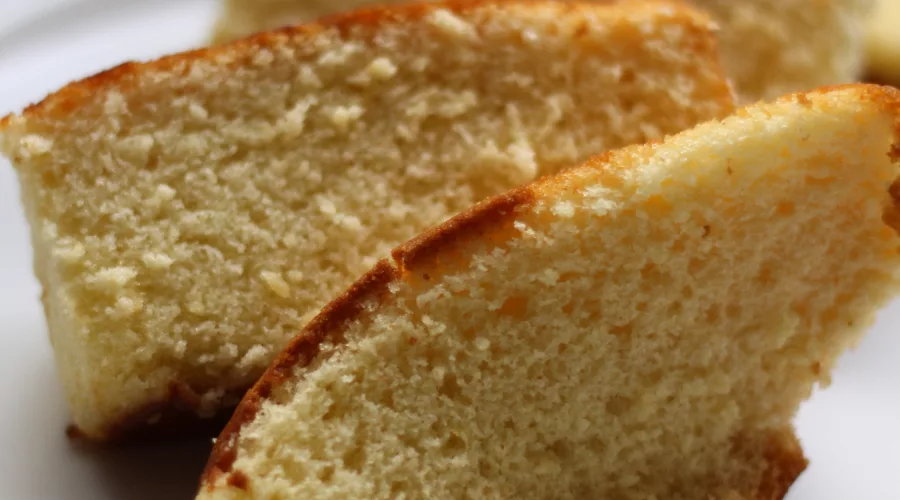
No. 2 among the world’s best cakes is Japan’s castella. Based mainly on flour, sugar, eggs, and syrup, this cake is actually easy to find back home, too. But unlike the Taiwanese or back-home versions that use butter and cooking oil in large amounts, Japanese-style castella is said to add no butter or oil at all. It achieves this kind of volume and flavor with meringue alone. The texture is soft, moist, and even a touch chewy. It was first brought to Japan by Portuguese merchants in the 16th century, and today castella comes in all sorts of flavors — chocolate, green tea, matcha, strawberry, vanilla, and more.
No. 1 New Zealand — Pavlova
Top1 New Zealand, Pavlova
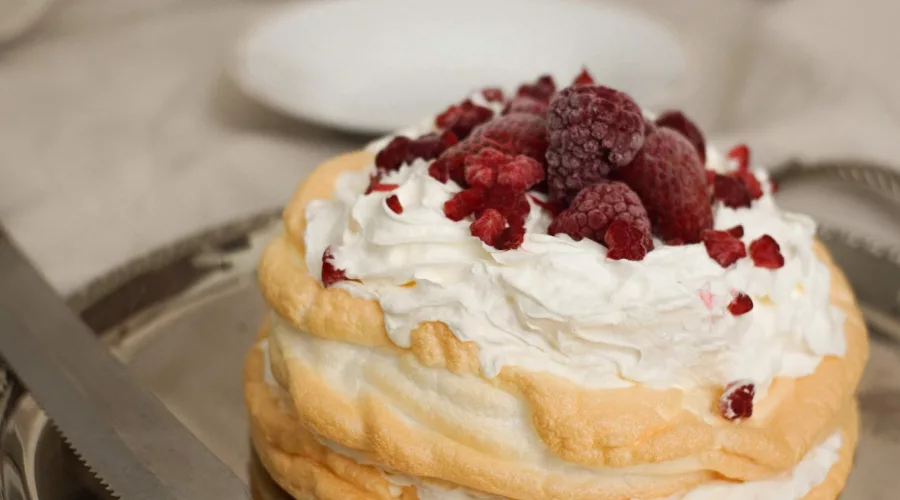
New Zealand’s Pavlova has landed at No. 1 among the world’s best cakes. The Pavlova, whose recipe was first published in 1935, has a look that makes it hard to picture as a cake at all. In fact, there are many versions depending on what kind of whipped cream you add on top of the finished cake and what fruit and treats you pair with it. The base stays fixed — meringue, sugar, vinegar, and vanilla essence — but it has the advantage that you can tweak the flavor however you like.
Maybe because of its dazzling looks, the Pavlova often shows up at big occasions like Christmas, birthdays, and weddings. Rather than soft, it has a chewy, crisp texture, making it a dessert well worth trying at least once. It also happens to be one of my favorite kinds of dessert.
Looking into the world’s best cakes, I picked up many interesting facts. First, castella. I found it fascinating that castella — once mired in controversy over heavy use of cooking oil — is in fact a cake that uses no oil at all. It makes me curious how a proper castella in Japan tastes compared with the castella back home.
I was also amazed that New Zealand’s Pavlova ranks this high worldwide, even though it isn’t a dessert you commonly see back home. Once again, it reminded me that the world is full of all kinds of foods, and there’s still so much I haven’t tasted. I’d assumed that back home, being serious about food, we had a relatively wide variety — but I found myself wondering whether there’s just a lot of fusion, and not much in the way of other countries’ traditional dishes.